A Glimpse into History
The roots of Bharatanatyam can be traced back to the ancient Hindu text, the Natya Shastra, a comprehensive treatise on the performing arts, including dance, music, and drama. This text, attributed to the sage Bharata Muni, is believed to have been written between 200 BCE and 200 CE. It provides a detailed framework for the various elements of dance, including posture, gestures, rhythm, and expression.
Bharatanatyam, in its early form, was deeply intertwined with temple rituals and was primarily performed by Devadasis, female dancers dedicated to the service of the gods and goddesses. They were trained in the temples and performed intricate dance sequences as part of religious ceremonies.
The dance form evolved over centuries, influenced by various dynasties and cultural movements. During the 19th and early 20th centuries, Bharatanatyam underwent a revival, thanks to the efforts of pioneers like Rukmini Devi Arundale, who helped to modernize and popularize the dance form. She established the Kalakshetra Foundation in Chennai, which played a crucial role in reviving and preserving Bharatanatyam.
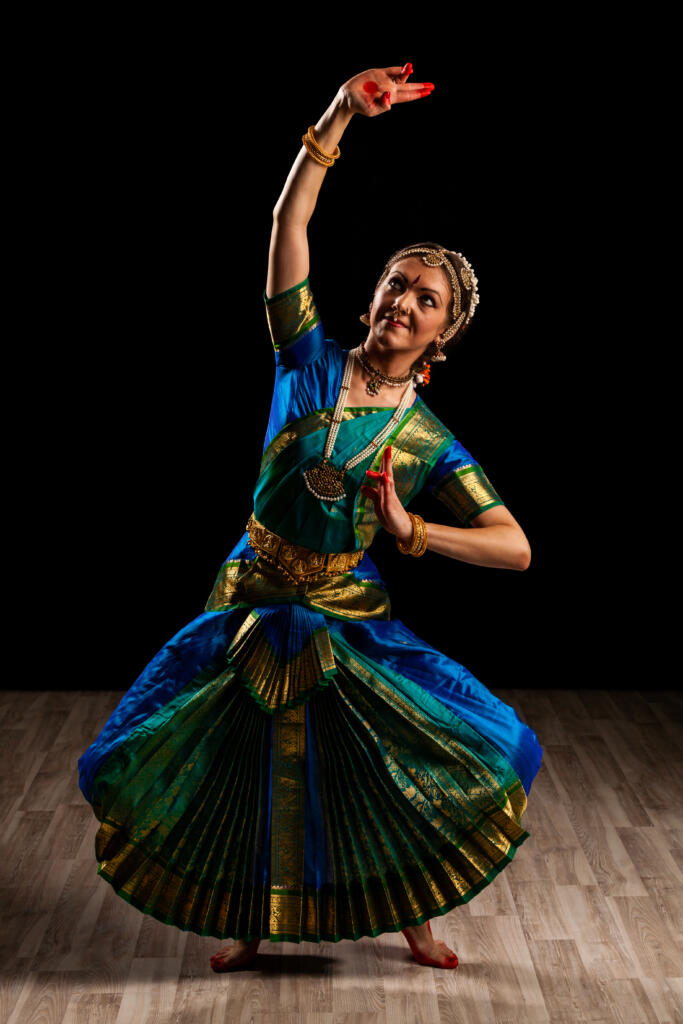
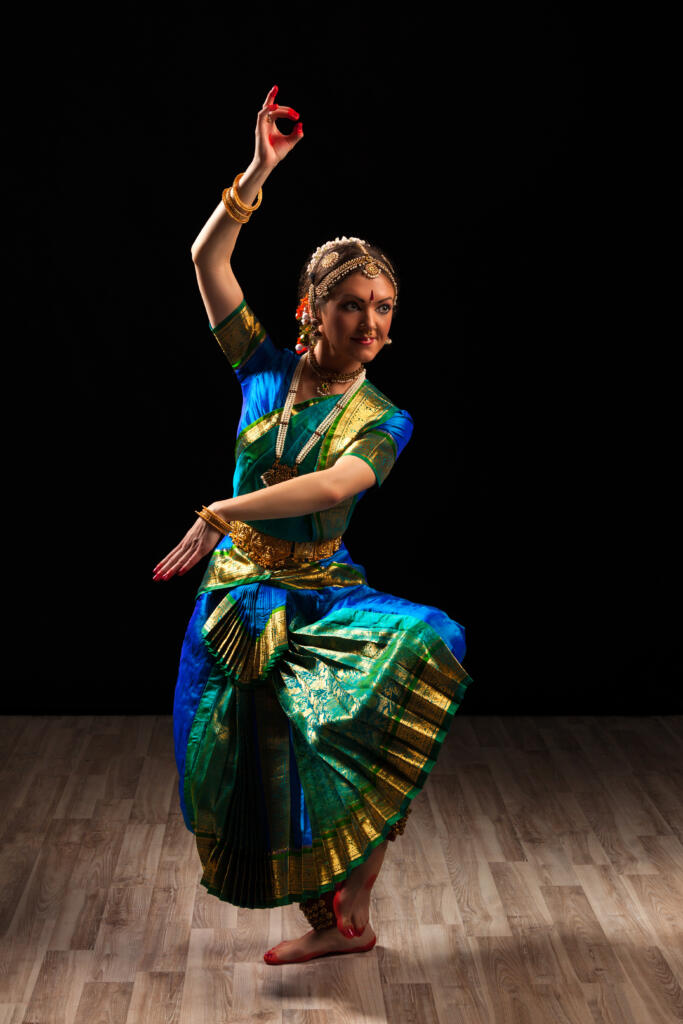
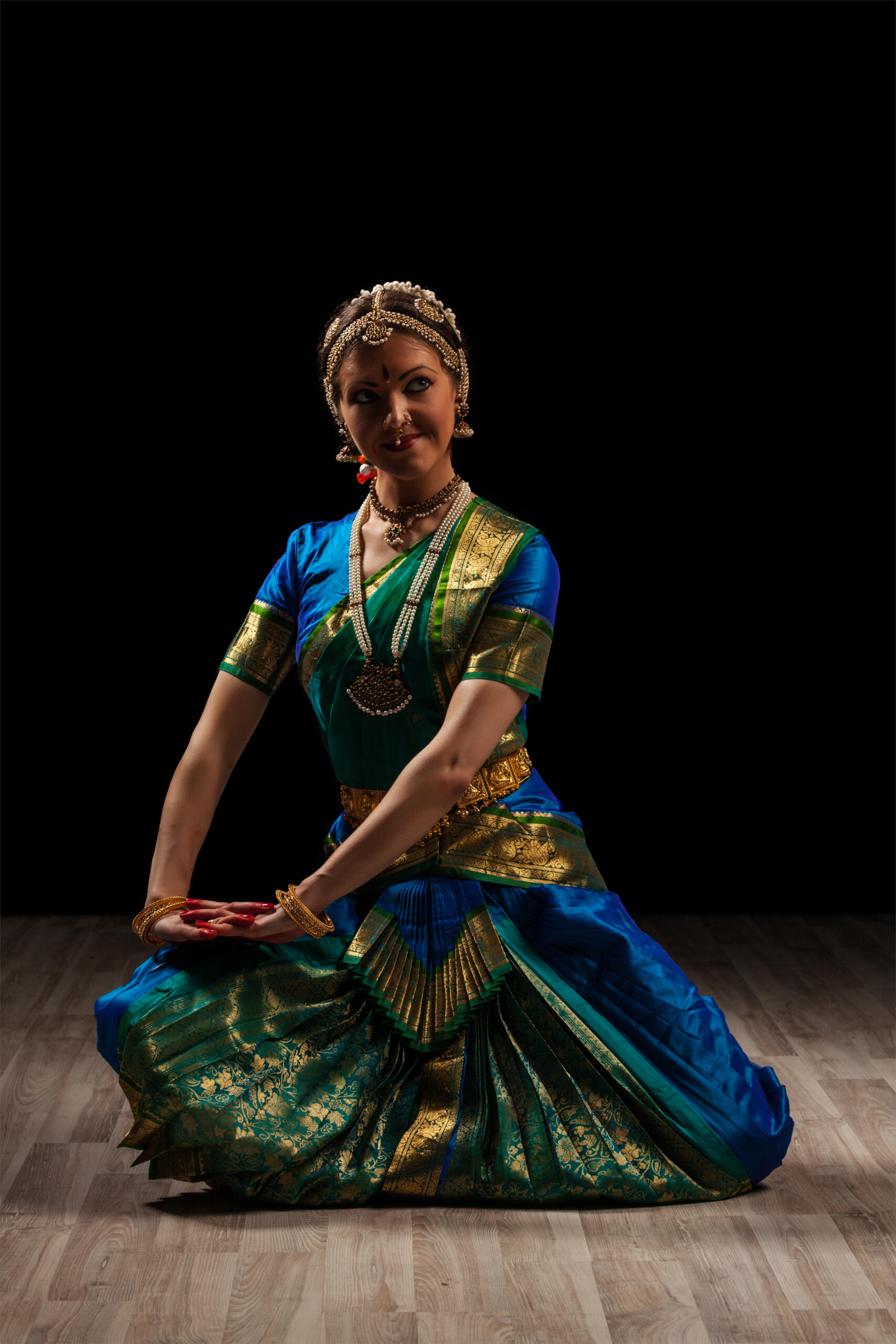
Today, Bharatanatyam is one of the most popular classical dance forms in India and is performed worldwide. It continues to captivate audiences with its grace, elegance, and expressive power.
Curriculum
Beginner:
- Introduction to Bharatanatyam: Focus on Namaskaram (prayers) and basic warm-up exercises.
- Single-Hand Mudras: Introduction to basic hand gestures, essential for storytelling.
- Basic Steps (Adavus): Learning foundational steps like Thattu Adavu and Nat Adavu, focusing on posture and alignment.
Intermediate:
- Extended Adavus Practice: Reinforcement of foundational steps and introduction to Natta Adavu and other advanced adavus.
- Introduction to Rhythm (Taalam): Basic understanding of rhythmic cycles and their use in Bharatanatyam.
- Navarasas: Introduction to the nine expressions essential for abhinaya, expanding emotional expressiveness in performance.
Advanced:
- Complex Choreographies: Learning intricate compositions like Varnam, Jathiswaram, and Padams.
- Solo Recital Preparation: Guidance on developing a solo repertoire, emphasizing personal expression, stage presence, and thematic interpretation.
- Facial Expressions: Refinement of Navarasas and expressive nuances for storytelling.
Competition Level:
- Polished Repertoire: Preparation of high-level pieces for competitions, focusing on intricate footwork, expressions, and stage presentation.
- Advanced Tala Variations: Mastery of rhythmic cycles to perform complex pieces with precision.
- Self-Choreography: Encouragement of self-choreographed solo or group pieces for performance showcasing innovation within tradition.
Learning Objectives
Prepare for advanced public and competitive performances.
Mastery of Bharatanatyam’s technical and expressive aspects.
Deep understanding of rhythm, posture, and coordination.